

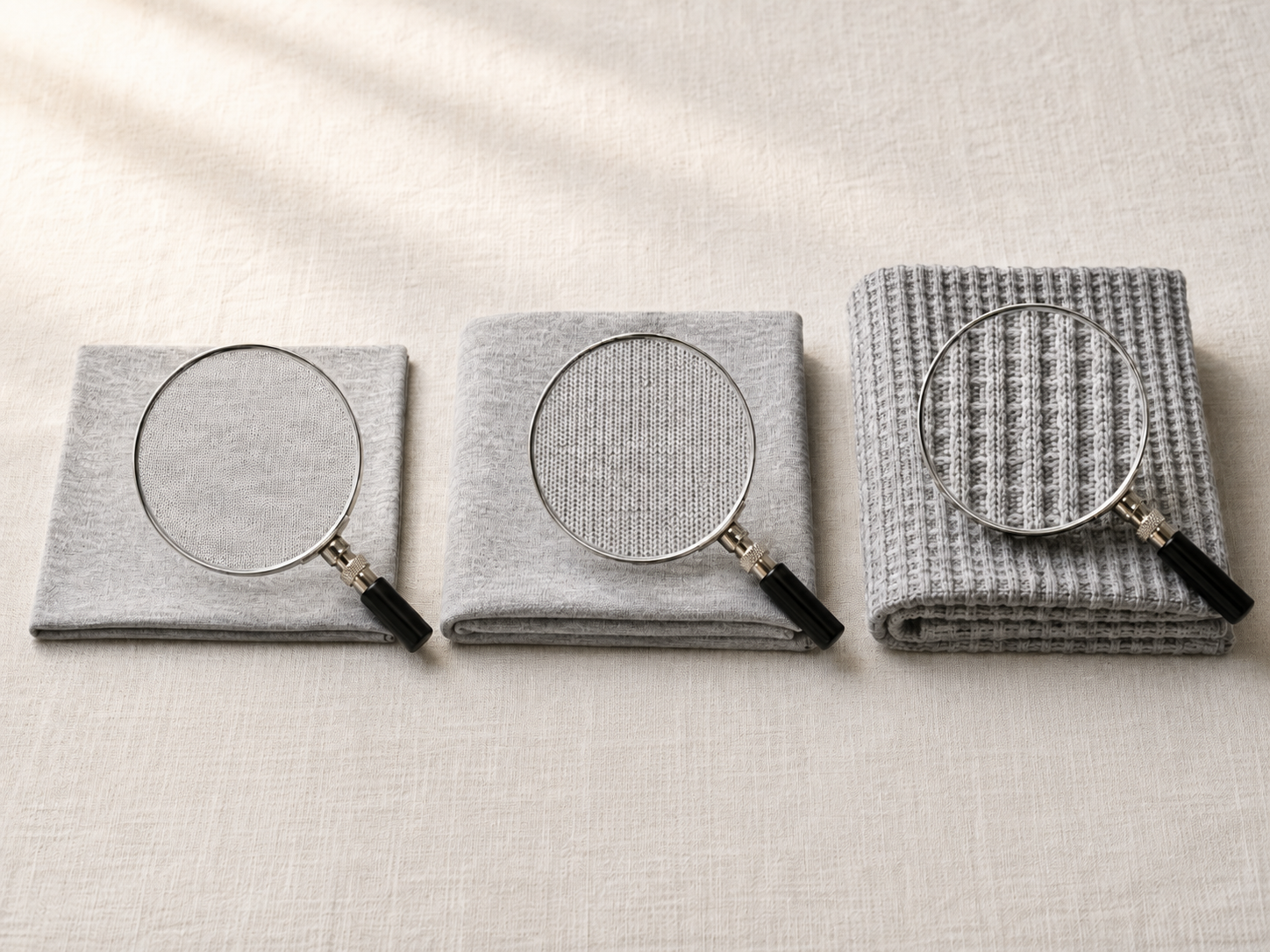

GSM (grams per square metre) tells you how heavy or dense a fabric is — the higher the number, the thicker the material. For innerwear, a lower GSM (around 130) gives you a light, breathable everyday piece, while a higher GSM (up to 170 and beyond) adds the warmth and coverage you want in thermal wear. Here’s how to actually use that number when you shop.
If you’ve ever picked up two cotton panties or briefs that look identical but feel completely different against your skin, GSM is usually why. It’s one of the few specs that tells you exactly what you’re getting before you even try the piece on — so it’s worth understanding, especially if you’re building an innerwear drawer that works across seasons.
What GSM Actually Means
GSM stands for grams per square metre. Imagine cutting a fabric swatch exactly one metre by one metre and putting it on a scale — the reading in grams is the GSM. It’s purely a measure of mass per area, which means it’s independent of the fibre itself. A 150 GSM cotton knit and a 150 GSM synthetic blend weigh the same per square metre, but they’ll feel completely different against the skin because of how the fibres behave.
For clothing in general, fabric in the 130–170 GSM range sits in the light-to-mid weight zone — soft, flexible, and breathable rather than stiff or structured. Textile industry references generally classify anything below 150 GSM as lightweight, with medium weight starting from there — which lines up with why most everyday innerwear falls into this window.
Why GSM Matters More for Innerwear Than Any Other Garment
For outerwear, GSM mostly affects drape and structure. For innerwear, it affects something more immediate: how your skin feels for the 12–16 hours a day you’re wearing it.
- Breathability: Lower GSM fabric has a more open structure, letting air circulate and heat escape rather than build up against the skin.
- Moisture handling: A lighter, well-knit cotton fabric wicks sweat away faster than a dense, heavy one, which matters most in humid climates or during a long work day.
- Comfort against sensitive areas: Innerwear sits directly against skin that’s more prone to irritation, so the fabric’s weight and softness have an outsized effect on daily comfort compared to, say, a t-shirt.
- Warmth: The one place higher GSM works in your favour is thermal wear, where you actually want the fabric to trap body heat.
GSM Chart: What Each Range Means for Innerwear
| GSM Range | Feel | Best For |
|---|---|---|
| 120–140 | Light, airy, most breathable | Daily hipsters and briefs, summer wear, humid climates |
| 140–160 | Balanced weight and coverage | All-season everyday wear, the most versatile range |
| 160–180 | Slightly denser, more structured | Transitional weather, extra coverage without full thermal warmth |
| 180+ | Heavy, insulating | Thermal innerwear for winter layering |
At Yoness, every fabric is knit and dyed in-house at a GSM between 130–170, chosen specifically for the piece it’s going into — lighter for daily panties, heavier toward the top of that range for pieces meant to carry into cooler weather.
Matching GSM to the Season
Summer and humid weather: Stick to the lower end of the range, around 130–140 GSM. The fabric feels almost weightless, dries faster after a wash, and won’t trap heat during long, sweaty days. This is the range to prioritise if you’ve ever dealt with chafing or that damp, uncomfortable feeling by afternoon.
Monsoon and transitional months: A mid-range GSM (around 150) gives you a fabric that’s still breathable but slightly more substantial, which helps it hold shape better through frequent washes during a season when you’re doing laundry more often.
Winter: This is where GSM does the opposite job — instead of prioritising airflow, you want the fabric to insulate. Thermal wear for women and thermal wear for men use a heavier, tighter-knit fabric that traps a layer of warm air close to the body. If you want a deeper breakdown of fit and layering for the cold months, our guide on choosing the right thermal wear for winter covers that in detail.
GSM Isn’t the Only Thing That Matters — Fibre Content Counts Too
A common mistake is assuming a higher GSM automatically means better quality. It doesn’t — GSM measures weight, not how well a fabric performs against skin. A heavy synthetic fabric can still trap moisture and irritate skin, while a well-made lightweight cotton can outperform it on comfort even at a fraction of the weight.
This is why fibre content and GSM need to be considered together. Cotton at 130–140 GSM breathes well because the fibre itself absorbs moisture, not just because it’s lightweight. Cleveland Clinic recommends cotton over synthetic fabrics specifically because it wicks away the sweat and moisture that bacteria and yeast thrive on — a fibre-level benefit that fabric weight alone can’t replicate. If you’re weighing cotton against synthetic fabric for your everyday innerwear, our detailed comparison on cotton vs synthetic innerwear walks through exactly why fibre type changes the comfort equation even at similar fabric weights.
How to Check GSM Before You Buy
Most product listings don’t always print the GSM number directly, so here’s what to look for instead:
- Read the product description — GSM or fabric weight is often mentioned alongside fibre content (e.g., “100% cotton, 150 GSM”).
- Check the season the piece is marketed for — thermal or winter-labelled pieces are almost always higher GSM by design.
- Feel for density, not just softness — a good-quality lower-GSM fabric can still feel soft; density tells you more about breathability than softness alone does.
- Look at the size guide and fit notes on the product page, since GSM and cut together determine how a piece actually feels once worn.
Browse the current range across women’s innerwear and men’s essentials, or check the deals page if you’re stocking up for the season ahead.
Caring for Different GSM Fabrics
Fabric weight also affects how you should wash and store a piece:
- Lower GSM (130–150): Wash in cool water and avoid wringing hard, since lighter knits can stretch out of shape more easily.
- Higher GSM / thermal (170+): These fabrics hold moisture longer during a wash, so air-drying fully before storing prevents a musty smell.
- Across all weights: Avoid high-heat tumble drying, which breaks down elastic fibres faster regardless of how heavy the fabric is.
If a piece doesn’t feel right after the first wash, Yoness offers easy returns and exchanges within 7 days, and you can check shipping timelines before you order.
Frequently Asked Questions
What GSM is best for everyday innerwear? Most people find 130–150 GSM the most comfortable for daily wear — light enough to breathe all day, with enough structure to hold shape through regular washing.
Is higher GSM always warmer? Generally yes. Higher GSM fabric is denser and traps more body heat, which is exactly why thermal wear uses a heavier GSM than daily innerwear.
Does higher GSM mean better quality? No. GSM measures weight, not quality. A well-constructed lightweight fabric can be more comfortable and just as durable as a heavier one — quality depends on fibre content, knit, and finishing, not weight alone.
Can I wear the same GSM innerwear all year round? A mid-range GSM (around 150) works reasonably well across most of the year in moderate climates, but switching to a lighter GSM in peak summer and a heavier thermal GSM in winter will feel noticeably more comfortable.
How do I know the GSM of the innerwear I already own? Without a lab scale, you can’t measure it exactly at home, but you can compare pieces side by side — the one that feels visibly thinner and lets light through more easily is the lower GSM fabric.
Ready to shop by fabric weight instead of guesswork? Head to the Yoness shop to browse everyday and thermal essentials built at the right GSM for each season, or read more about how every piece is made on our About Us page.
Leave a Reply